
👵 Why Seniors Are Prime Targets
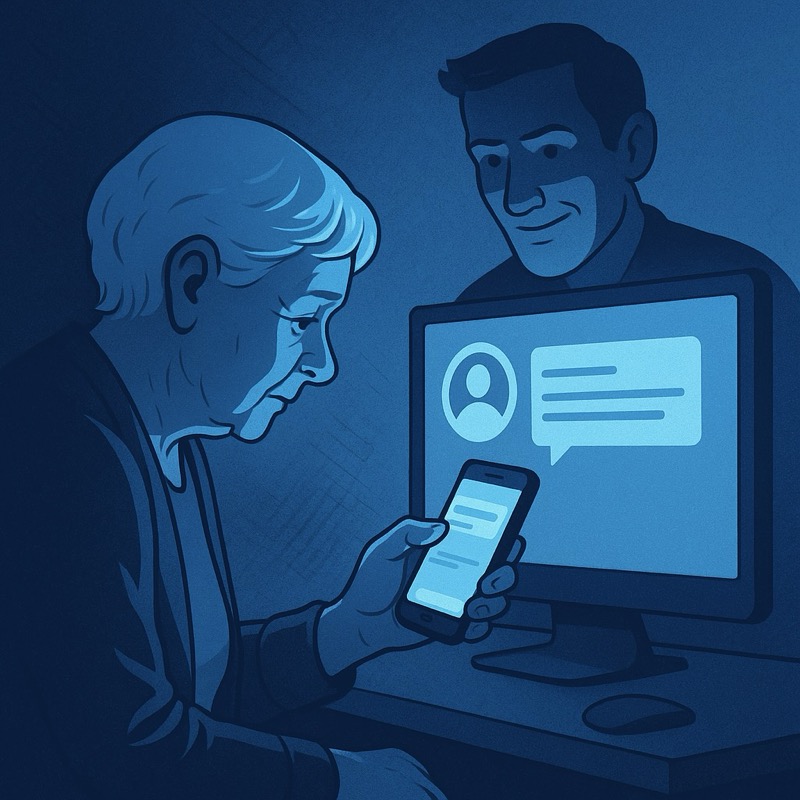
We often worry about kids online — and we're right to. But quietly, in the background, another group is being hit even harder: our parents and grandparents. And unlike kids, seniors usually blame themselves instead of the criminals.
"I thought it was real…" A pop-up claiming their computer is infected. A fake Facebook friend asking for help. A convincing voicemail from "the bank." A message that sounds exactly like their grandchild.
Seniors fall for these not because they're careless — but because they grew up in a world where phones were trustworthy, news was verified, strangers rarely had access to their private lives, and technology wasn't built to manipulate. Seniors aren't naive — they're generous.
🧠 Scammers exploit four senior vulnerabilities:
1️⃣ Trust — They trust brands, institutions, and voices from an era before scammers sounded professional.
2️⃣ Panic — A warning about a frozen bank account creates instant fear.
3️⃣ Urgency — Seniors worry about doing "the wrong thing," so they act quickly.
4️⃣ Isolation — Many don't want to "bother the kids," so they solve problems alone — and get trapped.
🎯 Tiny screens. Confusing apps. Security warnings that look identical to scams. Seniors aren't "bad with technology." Technology is bad at protecting them. Criminals know exactly how to weaponize kindness, trust, and love — the very qualities we admire in older generations.
Knowledge is the first step. Protection is the second.
WhiteCat is the router that quietly enforces the boundaries you set — no arguments, no workarounds.
See Plans →