
🤝 Social Skills at Risk
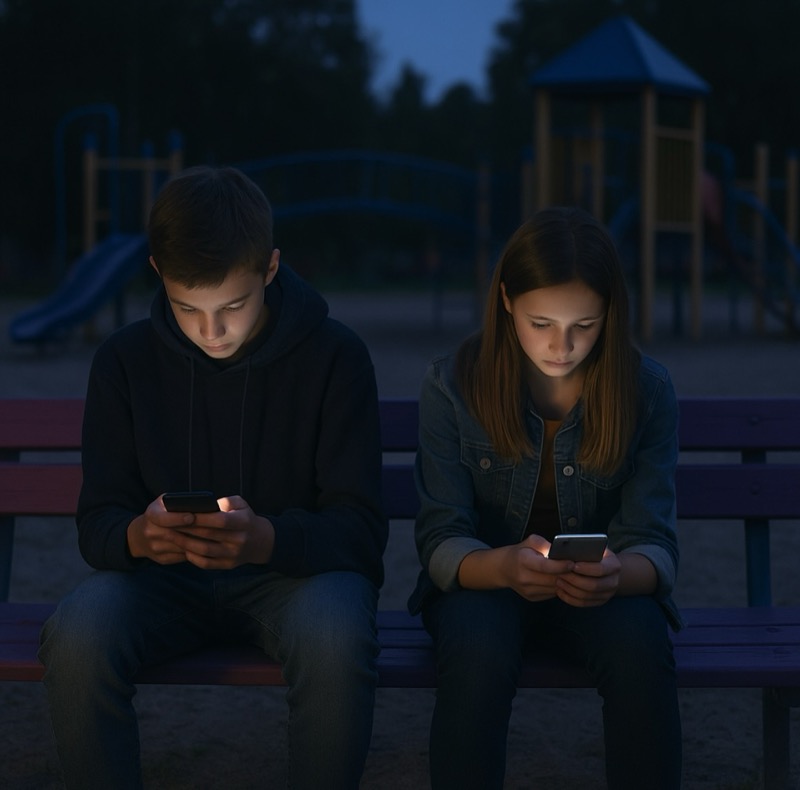
Childhood used to be practice for adulthood: learning how to share, how to comfort a friend, how to survive the awkward pauses of real conversation. That's where confidence, empathy, and resilience grow. But kids today are practicing something else entirely.
They're learning to replace eye contact with emojis. They're learning that a streak is a friendship, a like is approval, a filter is self-worth.
Parents notice it at the dinner table. Teachers notice it in classrooms. Coaches see it on the field. Kids together, but each staring into a private universe on their screen.
It's subtle, but powerful: A child who struggles to raise their hand in class will post on TikTok without hesitation. Teens who can't sit through a family meal without glancing at their phones will send hundreds of Snapchats a day. Many now feel more comfortable broadcasting their lives to strangers than speaking to the person sitting next to them.
And what does that mean for their future? When job interviews, relationships, and leadership all depend on real conversation — will this generation be ready?
This isn't just about wasted time. It's about a childhood shortcut — where real skills are replaced by digital stand-ins. And shortcuts don't build strength.
Knowledge is the first step. Protection is the second.
WhiteCat is the router that quietly enforces the boundaries you set — no arguments, no workarounds.
See Plans →