
👶 The Children's Content Illusion
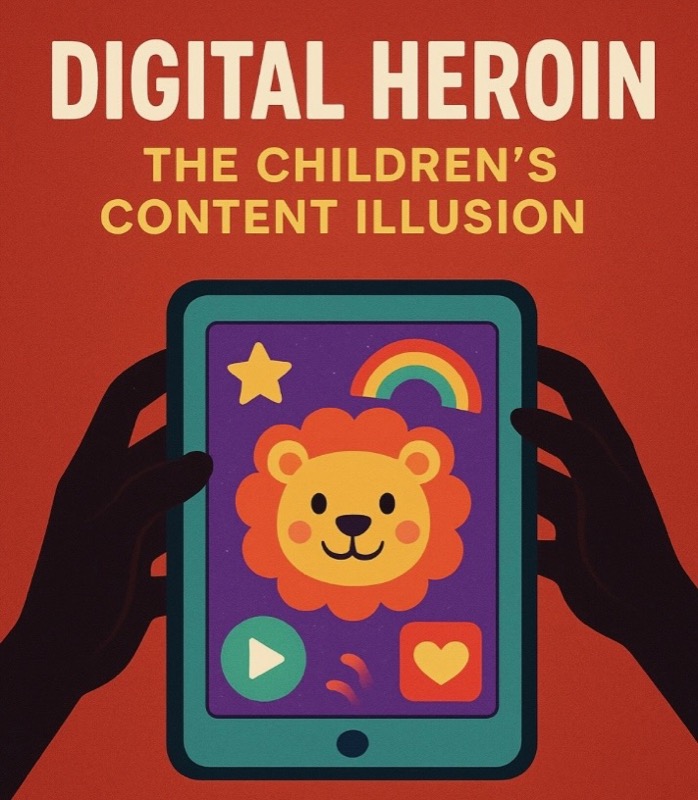
Parents often feel a false sense of relief when they hand over a tablet set to "kids' mode" or open a "child-friendly" app. Bright colors, cartoon mascots, and cheerful branding promise safety. But behind the curtain, these platforms are still built on the same business model: harvesting attention and data.
👉 What "kid-safe" really means: Ads are swapped for "promoted content." Games reward attention with coins, skins, or badges — training kids for endless engagement. In-app recommendations still rely on engagement-driven algorithms.
📊 A 2019 study by the University of Michigan found that 95% of apps labeled as "educational" for children included manipulative advertising or engagement tricks.
🧠 Child psychologists warn that these tactics blur the line between learning and consumption, shaping how kids measure value — not in knowledge gained, but in rewards unlocked.
Even platforms like YouTube Kids and "educational" games have been caught funneling children toward data collection and addictive loops. A 2021 report revealed that YouTube Kids repeatedly exposed young viewers to junk food ads and influencer marketing.
⚠️ If adults struggle to resist slot-machine mechanics, what chance does a 7-year-old have?
Knowledge is the first step. Protection is the second.
WhiteCat is the router that quietly enforces the boundaries you set — no arguments, no workarounds.
See Plans →